
Expert Ingrown Toenail Treatment at Star Physio Mosman Park
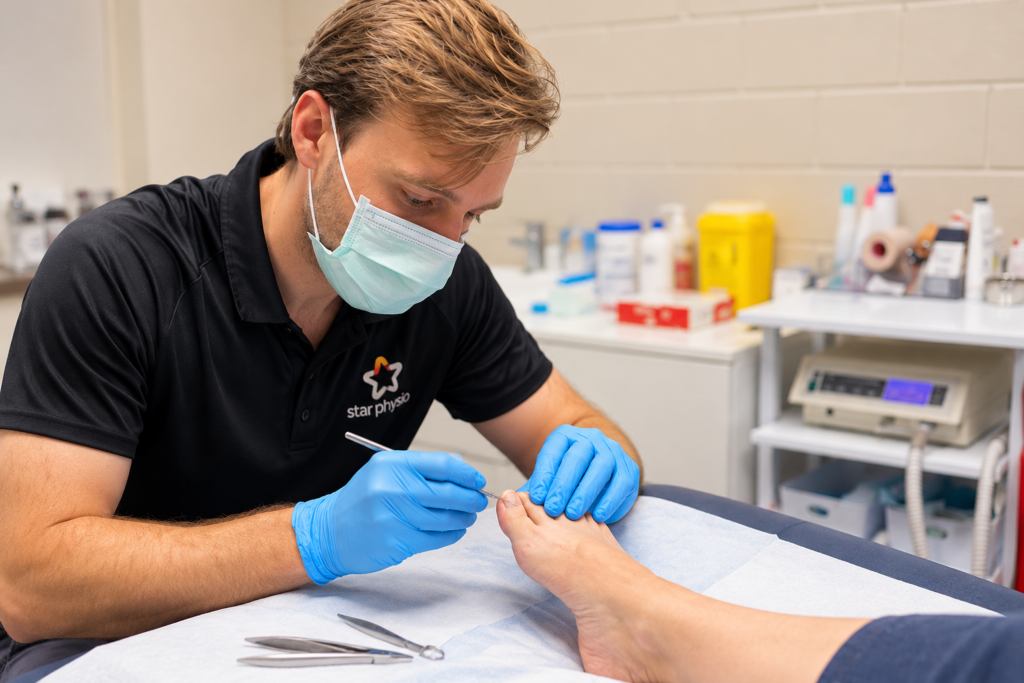
Dr Sam Steel providing expert ingrown toenail treatment at Star Physio Mosman Park.
Suffering from a painful or recurring ingrown toenail? At Star Physio, our experienced podiatrist Dr Sam Steel provides professional ingrown toenail treatment and minor nail surgery at our Mosman Park clinic.
Whether your toenail is causing pain when walking, wearing shoes or playing sport, we offer effective treatment options ranging from conservative podiatry care to partial and total nail removal.
Same-day consultation and surgery may be available, allowing suitable patients to have their ingrown toenail assessed and treated in a single visit.
Our aim is to relieve your pain, address the underlying problem and help you return to your normal activities as quickly and safely as possible.
Same-Day Ingrown Toenail Consultation & Surgery
Painful Ingrown Toenail? Assessment and Treatment in One Visit May Be Possible.
We understand that a painful ingrown toenail can make everyday activities uncomfortable, and that finding time for multiple appointments isn’t always convenient.
At Star Physio Mosman Park, Dr Sam Steel offers same-day assessment and minor toenail surgery when clinically appropriate and appointment time permits.
If surgery is recommended, we may be able to perform the procedure during your initial appointment, saving you the inconvenience of returning for a separate surgical visit.
What to Know Before Your Appointment
- Bring open-toed shoes, such as sandals or thongs, to accommodate the postoperative dressing.
- Arrange transport home if treatment involves your right foot or you drive a manual car. Local anaesthetic and dressings may affect your ability to drive safely.
- Allow up to 60 minutes for the appointment. The procedure itself can often be completed in approximately 30 minutes.
- Let reception know when booking that you may require nail surgery so we can allocate sufficient time where possible.
Your initial consultation fee is credited towards the cost of surgery if the procedure goes ahead, and your postoperative follow-up consultation is included in the surgery fee.
Book Your Ingrown Toenail Assessment
Same-day surgery is subject to clinical suitability and appointment availability.
What Causes an Ingrown Toenail?
An ingrown toenail occurs when the edge of a toenail presses into or penetrates the surrounding skin, causing pain, redness and inflammation. In more severe cases, the area can become infected, making walking, wearing shoes and exercising uncomfortable.
Ingrown toenails most commonly affect the big toe and can develop for several reasons:
- Incorrect nail trimming: Cutting toenails too short or rounding the corners can encourage the nail to grow into the surrounding skin.
- Tight footwear: Shoes that compress the toes can increase pressure around the nail.
- Naturally curved nails: Some people have a nail shape that makes ingrown toenails more likely.
- Running and sport: Repeated pressure, friction and trauma from sporting footwear can contribute to toenail problems.
- Toe injuries: Trauma to the nail can change how it grows and increase the risk of ingrowing.
Can an Ingrown Toenail Be Treated Without Surgery?
Not every ingrown toenail requires surgery.
Early treatment from an experienced podiatrist can often relieve discomfort and prevent the problem from worsening. At Star Physio, our Podiatry Perth services include assessment and treatment of ingrown toenails, nail conditions, foot pain and other common foot problems.
Mild or early-stage ingrown toenails can often be treated conservatively by a podiatrist. Treatment may include carefully removing the offending nail edge, reducing pressure on the surrounding skin and providing advice about nail care and footwear.
However, if an ingrown toenail is recurrent, particularly painful or causing ongoing inflammation, minor nail surgery may provide a more effective long-term solution.
At Star Physio Mosman Park, Dr Sam Steel will assess your toenail and recommend the most appropriate treatment, whether that involves conservative care or surgical nail removal.
Ingrown Toenail Surgery at Star Physio Mosman Park
For painful, persistent or recurring ingrown toenails, minor nail surgery can provide effective, long-term relief.
At Star Physio Mosman Park, Dr Sam Steel performs partial and total nail avulsion procedures under local anaesthetic, with phenol chemical matrixectomy where appropriate to reduce the likelihood of recurrence.
The most suitable procedure depends on the severity of your ingrown toenail, the condition of the nail and your individual circumstances.
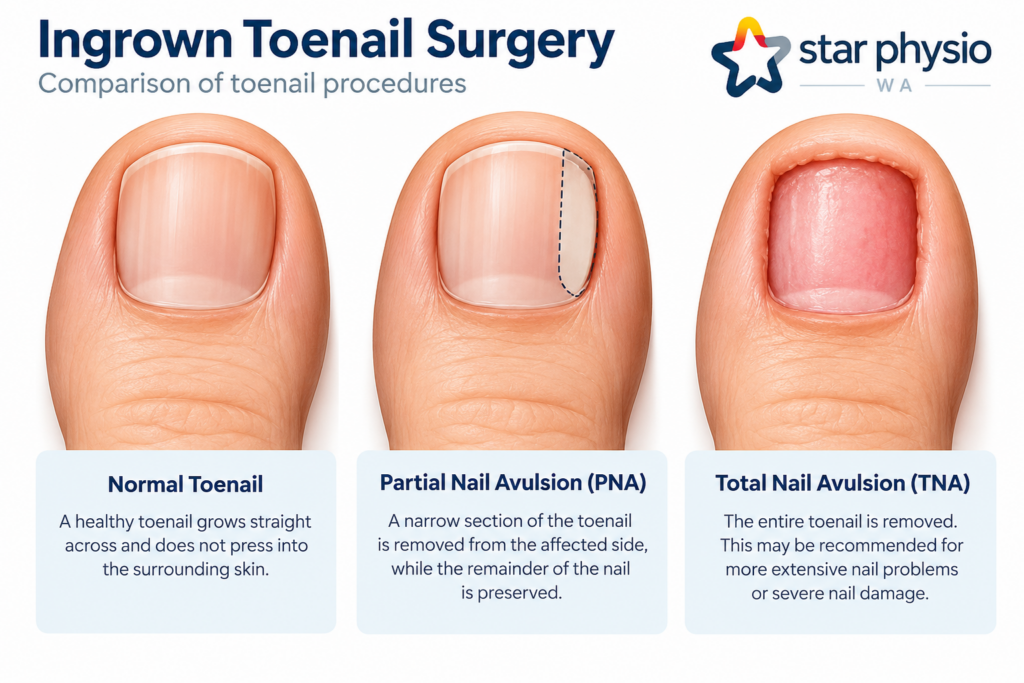
Partial nail avulsion removes the affected nail edge, while total nail avulsion removes the entire toenail.
Partial Nail Avulsion (PNA) – Ingrown Toenail Removal
Partial nail avulsion is the most common surgical treatment for recurring ingrown toenails.
This procedure involves removing the narrow section of toenail that is growing into the surrounding skin while preserving the healthy remainder of the nail.
It is particularly suitable when an ingrown toenail affects one side of the nail.
The toe is numbed using local anaesthetic before the affected nail edge is carefully removed.
In most cases, a chemical matrixectomy is also performed to reduce the likelihood of the problematic section growing back.
Typical wound healing time: 2–4 weeks.
Phenol Matrixectomy – Preventing Ingrown Toenail Recurrence
For patients experiencing recurring ingrown toenails, a phenol chemical matrixectomy can provide a longer-term solution.
Following removal of the ingrown section of nail, phenol is carefully applied to the nail matrix — the tissue responsible for producing new nail growth.
Phenol chemically destroys the targeted nail-producing cells, helping prevent the problematic nail edge from growing back.
The remainder of the toenail is preserved, maintaining most of its natural appearance.
Although this procedure is highly effective, some nail regrowth or recurrence remains possible.
Total Nail Avulsion (TNA) – Complete Toenail Removal
A total nail avulsion involves removing the entire toenail under local anaesthetic.
This procedure may be recommended for more extensive nail problems, including:
- Severe ingrown toenails affecting both sides of the nail
- Significantly damaged or deformed toenails
- Selected cases of severe nail disease
- Toenail problems following trauma
Unlike partial nail avulsion, total nail avulsion does not always involve a phenol matrixectomy.
Where the nail matrix is preserved, the toenail can gradually regrow. This may be appropriate when the aim is to remove a damaged nail while allowing healthy new nail growth.
Typical wound healing time: 4–6 weeks.
Dr Sam Steel will assess your nail and explain which procedure is most appropriate, including whether preventing future nail regrowth is recommended.
| Feature | Partial Nail Avulsion | Total Nail Avulsion |
|---|---|---|
| Nail removed | One affected edge | Entire toenail |
| Common reason | Recurring ingrown toenail | Severe nail damage or more extensive nail problems |
| Local anaesthetic | Yes | Yes |
| Phenol matrixectomy | Usually | Sometimes |
| Wound healing | 2–4 weeks | 4–6 weeks |
| Nail regrowth | Treated edge usually prevented from regrowing | Nail may regrow if matrix is preserved |
What Happens During Ingrown Toenail Surgery?
Ingrown toenail surgery is a relatively straightforward procedure performed under local anaesthetic at Star Physio Mosman Park.
Dr Sam Steel will explain the procedure, discuss the available treatment options and ensure you are comfortable before proceeding.
1. Assessment and Preparation
Your podiatrist will examine the affected toenail, assess your circulation and medical history, and determine whether partial or total nail avulsion is appropriate.
Surgery may be performed during your initial consultation if you are a suitable candidate and sufficient appointment time is available.
2. Local Anaesthetic
A local anaesthetic called lidocaine is injected around the base of the toe to numb the area.
The injection is usually the most uncomfortable part of the procedure and may feel like a brief sting.
Once the anaesthetic takes effect, the toe should be numb, allowing the procedure to be performed without sharp pain.
3. Toenail Removal
Depending on your condition, Dr Sam Steel will carefully remove either the affected edge of the toenail (partial nail avulsion) or the entire nail (total nail avulsion).
Where appropriate, phenol is applied to the nail matrix to reduce the likelihood of the problematic section of nail growing back.
4. Dressing and Aftercare
Following surgery, the toe is cleaned and covered with an appropriate dressing to protect the wound.
You will receive instructions about wound care, footwear, activity restrictions and what to expect during healing.
5. Follow-Up Appointment
A postoperative review is generally arranged 2–3 days after surgery to assess healing and provide further wound-care advice.
Your initial postoperative follow-up consultation is included in the surgery fee.
Surgical appointments are allocated up to 60 minutes, although the procedure can often be completed in approximately 30 minutes.
Recovery After Ingrown Toenail Surgery
Recovery following ingrown toenail surgery is generally straightforward, although healing times vary depending on the procedure performed, whether a phenol matrixectomy was required and your individual circumstances.
Most patients can return to light everyday activities relatively quickly, but the surgical wound will take longer to heal completely.
How Long Does an Ingrown Toenail Take to Heal After Surgery?
Typical wound-healing times are:
-
Partial Nail Avulsion: Approximately 2–4 weeks.
-
Total Nail Avulsion: Approximately 4–6 weeks.
These timeframes are guides rather than guarantees. Your podiatrist will monitor your recovery and provide individualised advice.
Walking and Everyday Activities
Most patients can walk following the procedure, although we recommend taking it easy for the first 24–48 hours.
Avoid unnecessary pressure on the toe and follow the wound-care instructions provided by your podiatrist.
When Can I Wear Normal Shoes?
We generally recommend avoiding enclosed footwear for approximately 48 hours after surgery.
Open-toed shoes, such as sandals or thongs, can help accommodate the dressing and reduce pressure on the surgical site.
Return to enclosed footwear when comfortable and when advised by your podiatrist.
Can I Drive After Ingrown Toenail Surgery?
Local anaesthetic, postoperative dressings and discomfort may temporarily affect your ability to operate vehicle pedals safely.
We recommend arranging someone to drive you home if surgery involves your right foot or you drive a manual vehicle.
Do not drive until you can safely and comfortably operate all vehicle controls, including performing an emergency stop.
When Can I Return to Running, Sport and Exercise?
Many patients can gradually resume non-contact exercise within approximately one week, depending on wound healing and comfort.
Contact sports, including football and soccer, may require two weeks or longer before returning.
Running and other activities involving repetitive pressure on the toe should be reintroduced gradually.
Your podiatrist will provide individualised return-to-sport advice based on your procedure, wound healing and sporting demands.
Looking After Your Toe Following Surgery
To support healing and reduce the risk of complications:
-
Follow the dressing and wound-care instructions provided.
-
Keep the wound protected and avoid unnecessary pressure.
-
Wear appropriate footwear during recovery.
-
Avoid swimming or immersing the wound until your podiatrist advises it is safe.
-
Attend your postoperative follow-up appointment.
-
Contact the clinic if you experience increasing pain, spreading redness, unusual discharge or concerns about healing.
If you develop rapidly spreading redness, fever or feel systemically unwell, seek prompt medical assessment.
At Star Physio, our aim is to help you recover comfortably and return to your normal activities as safely and efficiently as possible.
Am I Suitable for Ingrown Toenail Surgery?
Minor toenail surgery is generally a safe and effective treatment for persistent, painful or recurring ingrown toenails. However, not everyone requires surgery, and certain medical conditions may affect the suitability of the procedure or the healing process.
At Star Physio Mosman Park, Dr Sam Steel will assess your toenail, medical history and circulation before recommending the most appropriate treatment.
When Might Additional Assessment Be Required?
Some medical conditions and medications may require additional precautions before toenail surgery, including:
-
Diabetes: Particularly if you have reduced sensation, poor circulation or a history of foot complications.
-
Poor circulation: Reduced blood flow to the toes may affect wound healing.
-
Blood-thinning medications or bleeding disorders: These may require additional precautions to manage bleeding.
-
Previous wound-healing problems: Including slow-healing wounds or recurrent infections.
-
Pregnancy or breastfeeding: Additional consideration may be needed regarding medications and treatment.
-
Active infection: Significant or spreading infection may require additional medical assessment.
Having one of these conditions does not necessarily mean you cannot undergo toenail surgery. Your podiatrist will assess your individual circumstances and discuss the safest treatment options.
Please let our team know when booking if you have any relevant medical conditions or take blood-thinning medication. Do not stop prescribed medication unless advised by your treating doctor.
Is Surgery Always Necessary?
No. Many mild ingrown toenails can be successfully managed with conservative podiatry treatment.
However, when an ingrown toenail repeatedly returns, causes significant pain or fails to improve with conservative care, partial or total nail avulsion may be recommended.
Our priority is to provide the most appropriate treatment for your condition, whether that involves conservative care or minor toenail surgery.
Frequently Asked Questions About Ingrown Toenail Surgery
Does ingrown toenail surgery hurt?
Ingrown toenail surgery is performed under local anaesthetic, so you should not experience sharp pain during the procedure.
The most uncomfortable part is usually the anaesthetic injection, which may feel like a brief sting. Once the toe is numb, you may feel some pressure but should not feel pain.
Some discomfort can occur as the anaesthetic wears off. Your podiatrist will provide advice about managing postoperative pain.
Will my ingrown toenail grow back after surgery?
When a partial nail avulsion is combined with a phenol chemical matrixectomy, the aim is to permanently prevent the problematic section of nail from growing back.
Phenol destroys the targeted nail-producing cells, significantly reducing the likelihood of recurrence.
However, some regrowth or recurrence remains possible.
Following a total nail avulsion without matrixectomy, the entire toenail may gradually regrow.
Can I have ingrown toenail surgery at my first appointment?
Yes. Same-day consultation and ingrown toenail surgery may be available at Star Physio Mosman Park.
Dr Sam Steel can sometimes perform the procedure during your initial appointment if surgery is clinically appropriate and sufficient appointment time is available.
We recommend booking our dedicated ingrown toenail appointment, allowing up to 60 minutes, and bringing open-toed shoes.
If surgery cannot be performed on the day, we will arrange another suitable appointment.
How much does ingrown toenail surgery cost?
The cost depends on the procedure required.
At Star Physio, your initial consultation fee is credited towards the total cost of nail surgery once the procedure is completed.
Our reception team can provide current pricing when you book.
Private Health Fund Rebates Apply if you have Podiatry Cover.
Do I need a referral for ingrown toenail surgery?
No. You can book directly with our podiatrist for ingrown toenail assessment and treatment without a doctor’s referral.
Dr Sam Steel will assess your condition and determine whether conservative treatment or minor nail surgery is appropriate.
Is a follow-up appointment included in the surgery fee?
Yes. Your postoperative follow-up consultation is included in the cost of ingrown toenail surgery at Star Physio.
This appointment is generally scheduled 2–3 days after the procedure to assess wound healing, review dressings and provide further advice about wound care and returning to normal activities.
Book Ingrown Toenail Treatment & Surgery in Mosman Park
Painful or recurring ingrown toenail? Let Star Physio help you get back on your feet.
At Star Physio Mosman Park, Dr Sam Steel provides professional ingrown toenail treatment, including partial and total nail avulsion surgery under local anaesthetic.
Same-day consultation and surgery may be available, allowing suitable patients to have their ingrown toenail assessed and treated in a single appointment.
Why Choose Star Physio?
✓ Same-day assessment and surgery may be available
✓ Experienced podiatrist Dr Sam Steel
✓ Partial and total nail avulsion procedures
✓ Phenol matrixectomy to help prevent recurring ingrown toenails
✓ Initial consultation fee credited towards surgery
✓ Postoperative follow-up consultation included
Conveniently located at 588 Stirling Highway, Mosman Park, Star Physio welcomes patients from Cottesloe, Claremont, Peppermint Grove, Nedlands, North Fremantle and surrounding Perth suburbs.
Book Ingrown Toenail Treatment
Call (08) 6424 9578
Same-day surgery is subject to clinical suitability and appointment availability.
