
By Amy Ross | Physiotherapist & Exercise Scientist | Star Physio Perth
Have you been told you need to get stronger to recover from an injury, but heavy weights aren’t an option right now?
Perhaps you’re recovering from knee surgery, managing a painful joint or taking time away from running or cycling because of an injury.
Blood Flow Restriction (BFR) training allows us to challenge your muscles using much lighter loads than traditional strength training.
At Star Physio, we use BFR as one of several evidence-based rehabilitation tools to help patients maintain strength, rebuild muscle and continue progressing when heavy exercise isn’t appropriate.
And for endurance athletes, there’s another interesting benefit: research suggests BFR may also improve aerobic fitness during relatively low-intensity exercise.
What Is Blood Flow Restriction (BFR) Training?
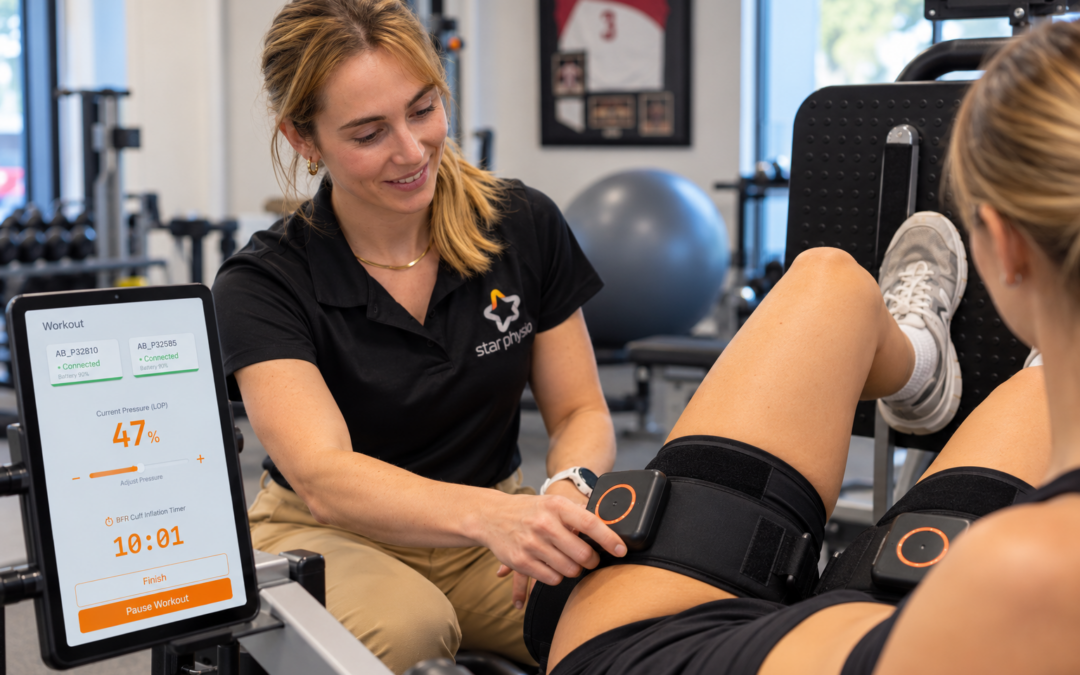
Blood Flow Restriction training involves applying a specialised inflatable cuff around the upper thigh or arm while performing exercise.
The cuff is inflated to an individually calculated pressure that partially restricts arterial blood flow and limits venous return from the working muscles.
This creates a challenging environment for the muscles, even when exercising with relatively light resistance.
For example, traditional strength training might require lifting 70–85% of your maximum capacity to achieve substantial strength and muscle adaptations.
With BFR, we can stimulate muscle development using loads as light as 20–40% of your maximum.
BFR can also be incorporated into low-intensity aerobic activities such as walking and cycling.
Research suggests that the metabolic stress created by BFR can stimulate muscle adaptations that would otherwise require substantially heavier exercise (Patterson et al., 2019).
Why Do We Use BFR in Physiotherapy Rehabilitation?
1. Build Strength Without Heavy Weights
One of the biggest challenges in rehabilitation is rebuilding muscle strength when an injured joint or healing tissue cannot tolerate heavy loading.
BFR allows us to challenge the muscles without placing the same mechanical demands on the injured area.
A systematic review published in the British Journal of Sports Medicine found that low-load BFR training improved muscle strength in people undergoing musculoskeletal rehabilitation (Hughes et al., 2017).
This makes it particularly useful when traditional heavy resistance training isn’t yet appropriate.
2. Reduce Muscle Loss Following Surgery or Injury
Muscle weakness and loss of muscle mass can develop rapidly following surgery or periods of reduced activity.
This is particularly noticeable in the quadriceps following knee surgery.
BFR training may help reduce muscle loss and support strength recovery during the early stages of rehabilitation.
Research following anterior cruciate ligament (ACL) reconstruction suggests BFR can improve some measures of muscle strength and knee function, although results vary between studies.
At Star Physio, we may incorporate BFR into a structured post-operative rehabilitation program alongside progressive strengthening, movement retraining and return-to-sport preparation.
BFR doesn’t replace traditional rehabilitation. It provides another way to maintain or rebuild strength while heavier exercise is temporarily restricted.
3. Strengthening for Knee Osteoarthritis
People with knee osteoarthritis often benefit from strengthening exercises, particularly targeting the quadriceps.
However, painful knees don’t always tolerate heavier gym-based exercises, especially when someone is beginning a strengthening program.
BFR offers an alternative approach using lighter resistance.
A 2025 systematic review of randomised controlled trials reported improvements in pain and muscle strength in people with knee osteoarthritis undertaking low-load BFR training.
For some patients, BFR can complement a broader exercise program, including the GLA:D osteoarthritis program offered at Star Physio.
4. Maintaining Strength as We Age
Maintaining muscle mass and strength becomes increasingly important as we get older, even more so for females.
For people who find heavy resistance training difficult because of joint pain, weakness or other physical limitations, BFR may provide an alternative way to stimulate muscle development.
It can be particularly useful as part of a supervised strengthening program, helping patients progressively build the capacity needed for everyday activities and exercise.
BFR Training for Runners, Cyclists and Rowers
This is where BFR becomes particularly interesting for endurance athletes.
At Star Physio, we regularly help runners, cyclists, triathletes and rowers manage injuries and return to training. Understanding the causes of endurance sport injuries and appropriate load management is an important part of this process.
While BFR is best known for its strength benefits, research also suggests that combining blood flow restriction with low-intensity aerobic exercise can produce cardiovascular adaptations.
This means that relatively easy walking or cycling sessions may provide a greater training stimulus than the same exercise performed without BFR.
The research is still developing, but there are some encouraging findings.
BFR Walking: An Option for Injured Runners
For runners recovering from an injury, maintaining aerobic fitness while reducing impact can be challenging.
Conditions such as Achilles tendon problems, some bone stress injuries and post-operative restrictions may require a temporary reduction in running.
Where walking is appropriate for the injury, BFR walking may provide an additional training stimulus without the impact associated with running.

Low-intensity treadmill walking with blood flow restriction (BFR) can provide an additional cardiovascular training stimulus during injury rehabilitation
In a study by Park and colleagues (2010), athletes completed low-intensity treadmill walking with blood flow restriction.
After two weeks, the researchers reported improvements in maximal oxygen uptake (VO₂max).
While this was a relatively small study, the findings suggest that BFR walking may provide cardiovascular benefits at exercise intensities that would normally be considered quite easy.
For injured runners, this could be a useful addition to a rehabilitation program while gradually progressing back towards normal training.
Importantly, BFR does not make an otherwise unsuitable activity safe. Walking or cycling must still be appropriate for the specific injury.
BFR Cycling: Aerobic Benefits With Less Training Load
Cycling is another area where BFR training has shown promising results.
In a study by Abe and colleagues (2010), participants completed low-intensity cycling with blood flow restriction.
The researchers reported improvements in aerobic capacity and muscle adaptations following the training intervention.
Interestingly, these improvements occurred despite relatively short sessions at low exercise intensities.
For cyclists and triathletes, BFR cycling may be useful when:
- Recovering from an injury that limits normal training intensity
- Rebuilding fitness after a period of reduced activity
- Combining rehabilitation with low-intensity cardiovascular exercise
- Looking for additional training options when higher-intensity exercise isn’t appropriate
BFR cycling isn’t intended to replace normal endurance training, but it may provide an additional stimulus during specific stages of rehabilitation or training. Read more about Star Physio’s bikefit and cycling rehabilitation here!
BFR Rowing: Emerging Research in Elite Athletes
Rowing is another endurance sport where researchers have investigated BFR.
A 2024 study involving world-class rowers examined the effects of incorporating BFR rowing into a training program.
The athletes demonstrated improvements in 2000-metre time-trial performance, although the study did not include a control group, meaning the improvements cannot be attributed confidently to BFR alone (Thompson et al., 2024).
Another controlled study published in 2024 found improvements in VO₂max following five weeks of low-intensity BFR rowing in elite rowers (Held et al., 2024).
These findings are encouraging, particularly for athletes looking to maintain training adaptations while managing fatigue or reducing training intensity.
However, research into BFR for rowing performance remains relatively limited.
For endurance athletes, BFR is best considered a complementary training tool rather than a replacement for traditional endurance training.
Is Blood Flow Restriction Training Safe?
When performed with appropriate screening, equipment and supervision, BFR training is generally well tolerated.
A systematic review examining BFR in people with musculoskeletal conditions found no clear increase in adverse events compared with conventional exercise (Minniti et al., 2020).
However, BFR is not suitable for everyone, and individual risk assessment is important.
Possible temporary side effects include muscle discomfort, soreness, bruising and altered sensation.
At Star Physio, we use specialised BFR equipment that allows cuff pressure to be adjusted according to the individual.
Rather than simply tightening a strap around the leg, we calculate an appropriate pressure based on the person’s limb occlusion pressure.
This allows us to deliver a more controlled and individualised training stimulus.
People with certain cardiovascular or circulatory conditions, a history of blood clots, clotting disorders or uncontrolled high blood pressure may require additional assessment or may not be suitable for BFR.
We recommend completing BFR training under the guidance of an appropriately trained healthcare professional rather than experimenting with inexpensive restriction straps at home.
How Does BFR Fit Into Your Physiotherapy Program?
At Star Physio, we believe successful rehabilitation involves more than simply repeating the same exercises every week.
Our goal is to provide a progressive, individualised program that helps you regain confidence, rebuild capacity and return to the activities you enjoy.
BFR is one of the tools we can use alongside:
- Progressive strength and conditioning
- Post-operative rehabilitation
- Sports injury management
- GLA:D knee and hip osteoarthritis programs
- Running and cycling rehabilitation
- Return-to-sport exercise programs
For some patients, BFR may be useful early in rehabilitation when heavier exercise isn’t possible.
For others, it may provide an additional training stimulus while gradually returning to normal exercise.
As strength and tissue tolerance improve, we generally aim to progress towards conventional resistance training and sport-specific exercise.
Could BFR Training Help You?
Whether you’re recovering from surgery, managing knee pain or trying to maintain fitness during an injury, blood flow restriction training may be worth considering.
At Star Physio, our physiotherapists can assess your injury, discuss your goals and determine whether BFR would be a suitable addition to your rehabilitation program.

About the Author – Amy Ross
Amy Ross is a Physiotherapist and Exercise Scientist at Star Physio West Perth. With a strong interest in sports rehabilitation, endurance athletes and strength and conditioning, Amy combines evidence-based physiotherapy with exercise science to help patients recover from injury and return to the activities they enjoy.
References
- Patterson SD, Hughes L, Warmington S, et al. (2019). Blood Flow Restriction Exercise: Considerations of Methodology, Application, and Safety. Frontiers in Physiology, 10:533.
- Hughes L, Paton B, Rosenblatt B, Gissane C, Patterson SD. (2017). Blood flow restriction training in clinical musculoskeletal rehabilitation: a systematic review and meta-analysis. British Journal of Sports Medicine, 51(13):1003–1011.
- Li X, Xiao F, Ren H, et al. (2025). The effects of blood flow restriction training on early muscle strength and mid-term knee function following anterior cruciate ligament reconstruction: a systematic review and meta-analysis. Journal of Orthopaedic Surgery and Research.
- Blood Flow Restriction Training and Its Use in Rehabilitation After Anterior Cruciate Ligament Reconstruction: A Systematic Review and Meta-Analysis. (2024).
- Impact of low-load blood flow restriction training on knee osteoarthritis pain and muscle strength: a systematic review and meta-analysis of randomized controlled trials. Frontiers in Physiology. (2025).
- Park S, Kim JK, Choi HM, et al. (2010). Increase in maximal oxygen uptake following 2-week walk training with blood flow occlusion in athletes. European Journal of Applied Physiology, 109:591–600.
- Abe T, Fujita S, Nakajima T, et al. (2010). Effects of low-intensity cycle training with restricted leg blood flow on thigh muscle volume and VO₂max in young men. Journal of Sports Science & Medicine, 9:452–458.
- Thompson KMA, Pethick WA, Clarke J, et al. (2024). Blood Flow-Restricted Training and Time Trial Performance: A Cohort Study of World-Class Rowers. Medicine & Science in Sports & Exercise, 56:1606–1614.
- Held S, Rappelt L, Rein R, et al. (2024). Five-Week, Low-Intensity Blood Flow Restriction Rowing Improves VO₂max in Elite Rowers. Journal of Strength and Conditioning Research, 38:e299–e303.
- Minniti MC, Statkevich AP, Kelly RL, et al. (2020). The Safety of Blood Flow Restriction Training as a Therapeutic Intervention for Patients With Musculoskeletal Disorders: A Systematic Review. American Journal of Sports Medicine, 48:1773–1785.
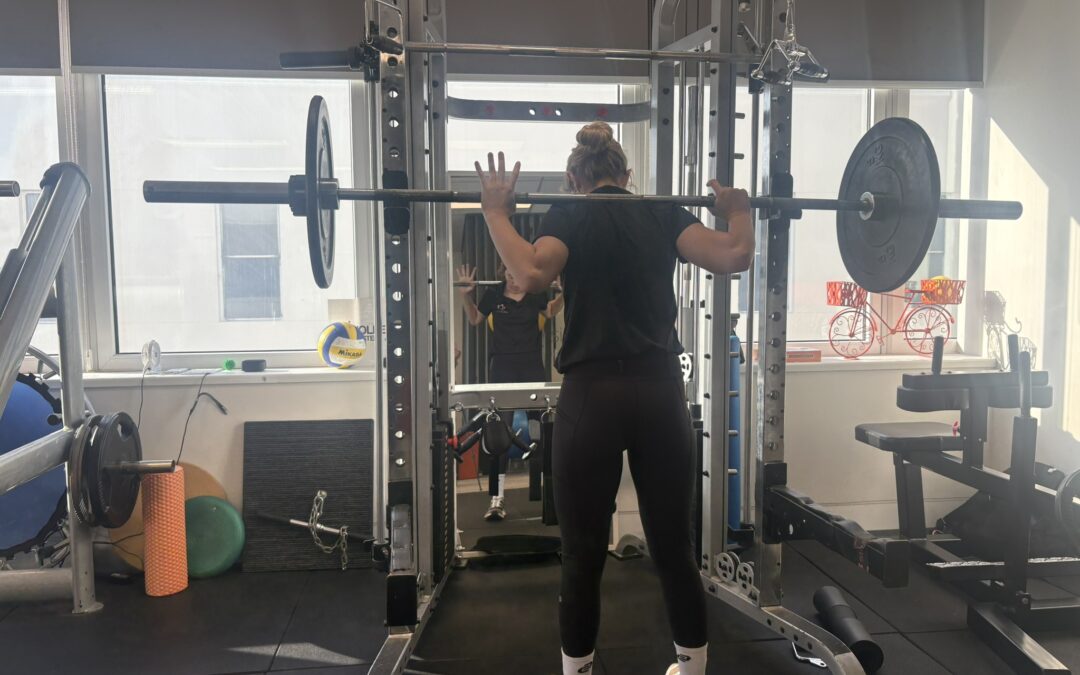
Strength training for triathletes
Strength Training for Triathletes: Improve Performance, Cycling Power and Injury Prevention Written by Amy Ross, Physiotherapist & Exercise Scientist at Star Physio WA, with a clinical focus on strength, rehabilitation and return to sport performance.Why...
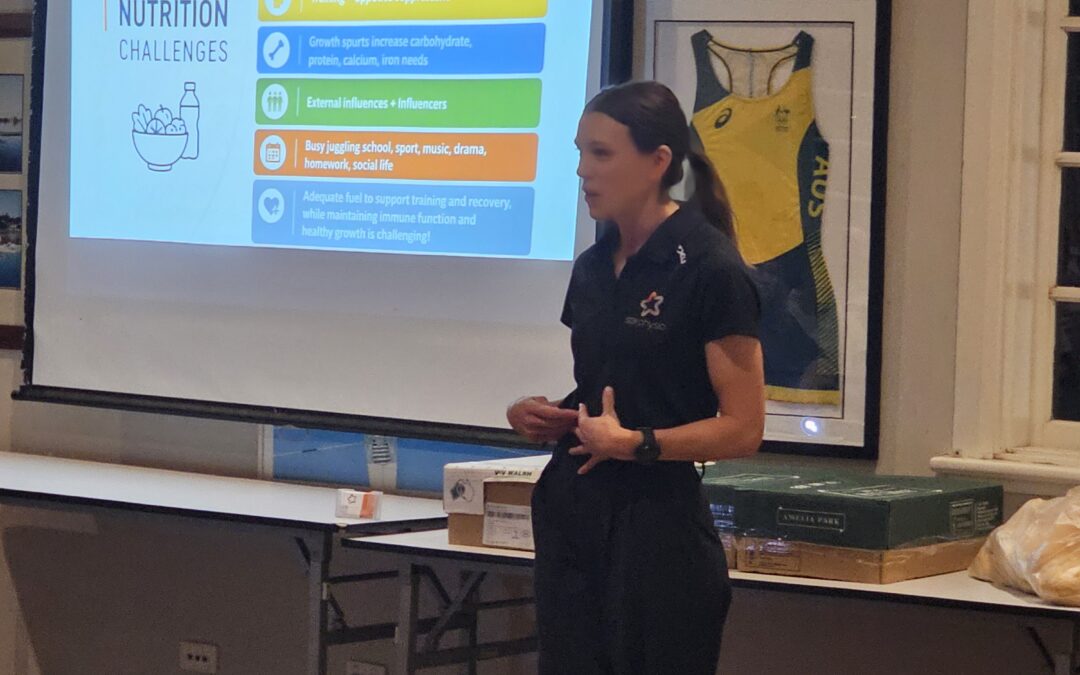
Rowing Nutrition Sports Dietitian Perth
Star Physio sports dietitian Donna Kimpton recently presented at the UWA/Shenton Rowing Club Development Dinner on fuelling for rowing performance. Access practical nutrition cheat sheets for rowers and learn how sports nutrition can improve recovery and performance.
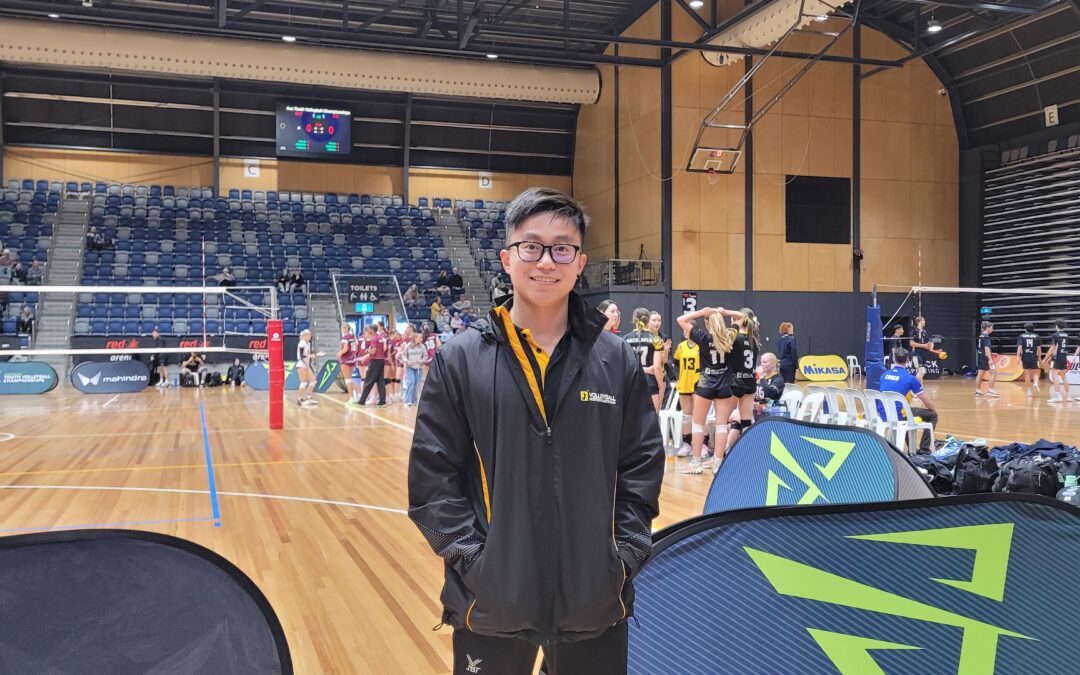
Free volleyball injury advice perth
Free Volleyball Injury Advice at WA Youth State Team Trials Star Physio WA are proud to continue supporting Volleyball WA and the next generation of volleyball athletes in Western Australia. Aaron Tay from Star Physio WA will be available during the WA Youth State...
Winter Sports Podiatry Perth
Winter Sports Podiatry at Star Physio WA Winter in Australia brings a shift in sporting culture — from summer cricket and athletics to AFL, netball, soccer and rugby. These sports involve high impact, rapid changes of direction and increased physical demand, placing...
