
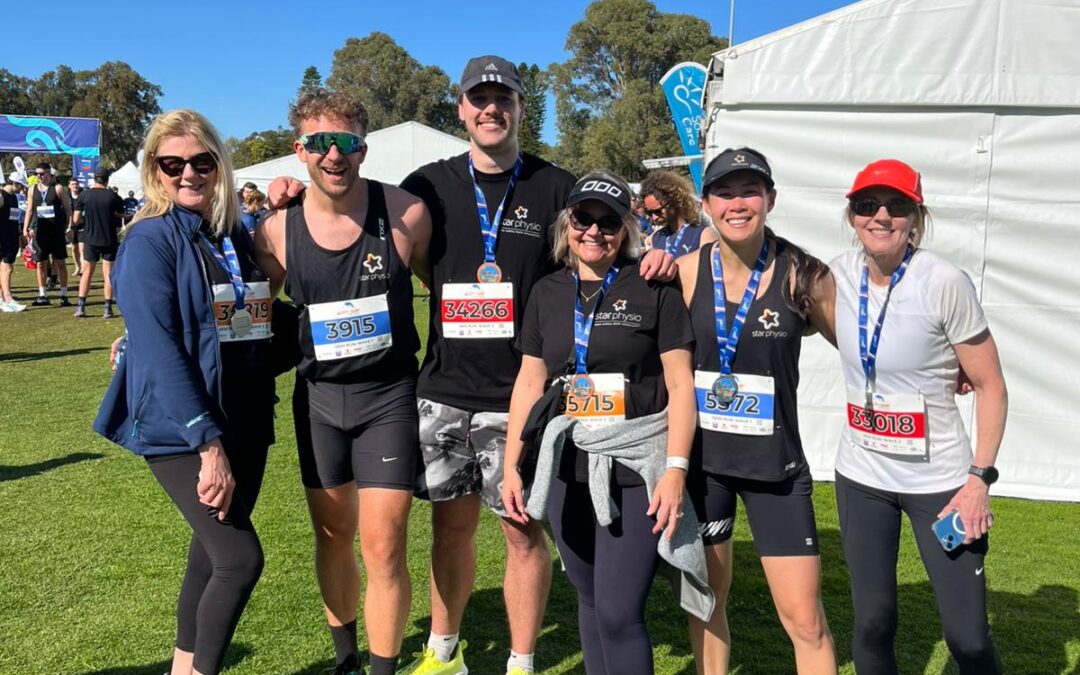
Returning to exercise in Spring.
Star Physio’s Nigel Travers keeps on running!!!
Spring is here! It’s fantastic to see so many Perth people getting outdoors again as the weather warms up and the days grow longer. However, before you dive back into running, cycling, or gym sessions, there are a few important things to consider. Here are our top tips for returning to exercise safely after a winter break.
Has Your Fitness or Strength Dropped?
Strength holds on surprisingly well during a short break. On the other hand, aerobic fitness and “spring” or bounce tend to drop away much faster. As a result, you may feel flat when you start training again.
👉 Check out Steve Jeffries’ article on strength decay for more detail.
Have You Put on Weight?
Exercise performance is often a power-to-weight ratio game. When walking or running, even small increases in body weight magnify the load on muscles, tendons, and joints like your knees and lower back. In addition, excess fat produces inflammatory hormones that can actually make pain worse.
👉 Need support? Book an appointment with our Dietitian Donna Kimpton at Mosman Park or Clinical Nutritionist, Jemma Watson in West Perth, for advice on healthy eating and long-term weight management.
Are You Ignoring an Old Injury or Niggle?
Rest may reduce pain temporarily, but it also decreases fitness and strength. Therefore, if you’ve carried a niggle through winter, now is the time to get it checked before you ramp up your training load.
👉 Don’t wait—book with one of our physiotherapists today.
James Lewin is a former elite triathlete who is now physio to the best in the world!
Start Slowly and Build Gradually
If you’ve had a lazy winter, start at 50% of your previous volume and increase by just 10–20% per week. For example, use a simple walk/run plan rather than jumping straight into long-distance runs. Most importantly, listen to your body and adjust as you go.
Many athletes—at all levels—train too hard, too often. However, research shows that the best athletes in the world, including those James Lewin works with as physiotherapist to the Australian Triathlon Team, spend most of their training at low intensity. Consequently, building your base gradually sets you up for better performance and fewer injuries. Check out that great read here!
Takeaway
In summary, if you’re returning to exercise this spring, start slow, respect your body, and seek expert help when needed. At Star Physio WA, our physiotherapists, exercise physiologists, and nutritionists are here to help you rebuild strength, fitness, and confidence—safely and sustainably.
📞 Call us on 6424 9578 or
🌐 Book online today.

Tara West knows Best – Lebron James’ Recovery Strategies
We are five games into the NBA playoffs (Warriors vs Cavaliers) and so far the Warriors are leading three games to two. With a number of injuries plaguing the Cavs in this finals series, super athlete Lebron James has a big task ahead of him. His best three teammates...

Tara West knows Best – Thoracic spine mobility in volleyball players
Thoracic spine mobility is really important for volleyball players. Poor thoracic mobility (specifically thoracic extension) has been shown to reduce performance in overhead athletes, and has been linked to shoulder pain. A flexed thoracic spine will affect your...

Nick Baldwin – Ironman Brazil 2015
If you wanted to know what one of the best Ironman athletes in the world looks like close up on the bike, look no further! Nick Baldwin is a professional triathlete from Seychelles who is currently in Perth, and this week he came in to Star Physio for a review of his...
Tara West knows Best – Star Physio on YouTube!
Not only are we great physios here at Star Physio, but as it turns out we are also very tech savvy!Yes that’s right… we have our own YouTube channel!! You can check it out at the link below: https://www.youtube.com/user/PerthPhysioAnd what will you find if you check...
