
Strength Training for Triathletes: Improve Performance, Cycling Power and Injury Prevention

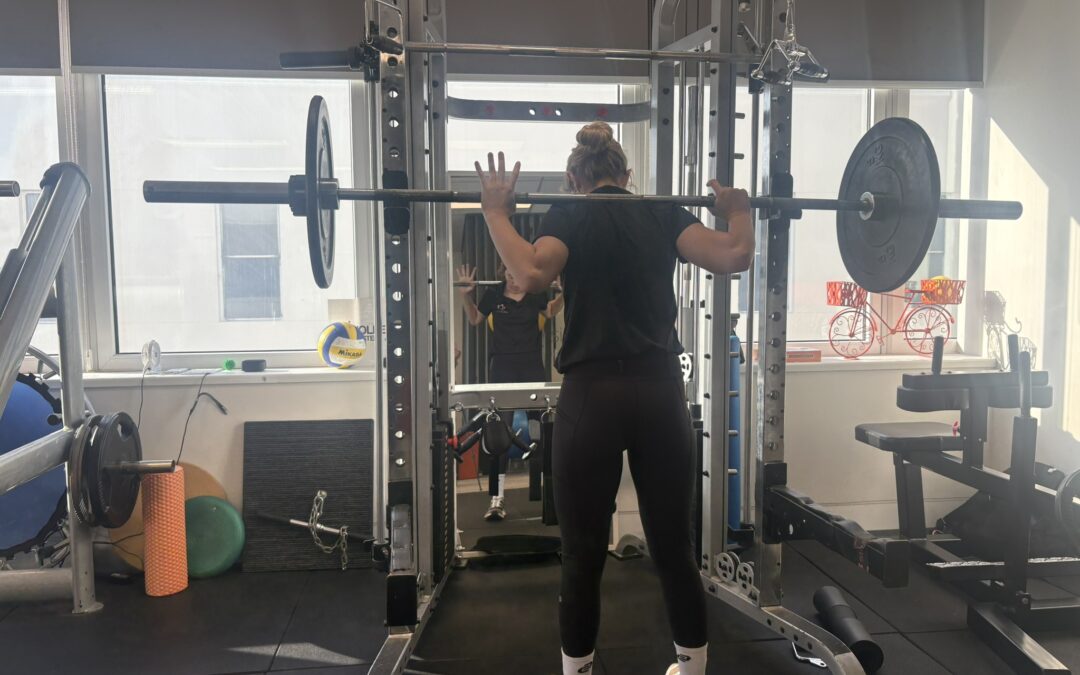
Amy Ross showing her strength in cycling.
Written by Amy Ross, Physiotherapist & Exercise Scientist at Star Physio WA, with a clinical focus on strength, rehabilitation and return to sport performance.
Why Strength Training Is Essential for Triathletes
Triathlon training focuses heavily on swimming, cycling and running. However, one of the most important components of performance is often overlooked — strength training.
A well-structured strength program can improve efficiency, reduce injury risk and enhance performance across all three disciplines — particularly in cycling, where power output and fatigue resistance are critical.
Without it, athletes are more likely to break down over time or plateau in performance.
Strength Improves Performance Across All Disciplines
Running
Strength training improves:
- force production
- running economy
- injury resilience
Stronger athletes are better able to tolerate load and maintain technique under fatigue.
Learn more about our running analysis and physiotherapy services!
Cycling
Cycling often makes up the largest portion of training volume for triathletes.
Strength training contributes to:
- increased power output
- improved climbing ability
- better sprint performance
- reduced fatigue late in races
However, steady-state riding alone does not build the strength required for higher intensity efforts.
Swimming
Strength supports:
- shoulder stability
- force transfer through the stroke
- upper body endurance
Strength vs Speed: The Missing Link
Many triathletes get stronger — but still fail to see improvements in performance.
This is because strength alone is not enough.
To perform effectively, athletes must also develop rate of force development (RFD) — the ability to produce force quickly.
Learn more in our article on strength training rehabilitation and rate of force development.
Without RFD:
- movements become less efficient
- fatigue has a greater impact
- injury risk increases
Strength Training for Cycling Performance
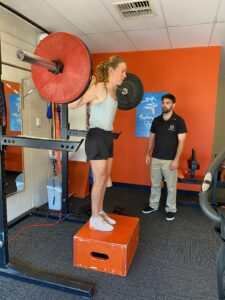
Jess Allen, former World Time Trial Champion and Professional Cyclist in the Star Physio gym.
Cycling performance relies heavily on the ability to produce and sustain power.
For both triathletes and cyclists, strength training can significantly improve:
- peak power
- acceleration
- climbing performance
- fatigue resistance
Developing both maximal strength and RFD allows cyclists to:
- accelerate more effectively
- maintain power under fatigue
- improve efficiency over long distances
At Star Physio, we integrate strength training with on-bike demands and positioning to ensure it translates directly to performance.
You can also explore our bikefit physiotherapy section to optimise your position and power output.
Best Strength Exercises for Triathletes
Strength work in the Star Physio Gym.
A strong program may include:
- squats
- leg press
- deadlifts
- split squats
- step-ups
- calf strengthening
These exercises build the foundation required for endurance performance and injury resilience. Which combination of these exercises, how many and how heavy is the key to getting the most out your gym session. This is where the Star Physio expert team can help!
Adding Explosive Training
To improve RFD, include:
- jump squats
- plyometric drills
- bounding and hopping
- explosive step-ups
The key is intent — moving quickly and powerfully, not just completing the movement.
Common Strength Training Mistakes
- lifting slowly all the time
- focusing only on endurance training
- excessive volume without quality
- poor integration with triathlon training
- exercises not specific to individual characteristics
- stopping all strength work during taper
How to Integrate Strength Into Triathlon Training
- 2–3 sessions per week
- prioritise quality over volume
- perform explosive work early in sessions
- align strength work with overall training load
- get an expert to help put the right plan together for you!
Integrated Approach to Triathlon Performance
For cyclists and triathletes, the best results come from combining strength training with movement and equipment optimisation.
At Star Physio, we integrate:
- strength training
- running analysis
- bikefit physiotherapy
to improve performance and reduce injury risk.
Explore our triathlon physiotherapy perth service to see how this approach is applied in practice.
Why Work With Star Physio
At Star Physio, we combine physiotherapy, strength and conditioning, and endurance sport expertise to deliver targeted programs for triathletes and cyclists.
Our approach focuses on:
- improving performance
- reducing injury risk
- supporting long-term training consistency
Final Takeaway
Strength training is essential for triathletes.
But the goal is not just to get stronger.
It is to:
- produce force efficiently
- maintain performance under fatigue
- apply strength quickly when it matters
This is what allows athletes to perform consistently across swimming, cycling and running.
Want a Strength Program That Works for Triathlon?
If you are looking to improve performance or reduce injury risk, Amy Ross and the team at Star Physio can help.
Book a consultation to develop a program tailored to your training and goals.
11 Signs You Have Tennis Elbow and What to Do About It
If you’ve ever suffered from tennis elbow, you’ll know that the sore, hot pain on the outside of the elbow can be difficult to bear when you’re performing regular, everyday activities like picking things up or typing on a computer. But while the condition is called...

5 Things the Right Bikefit Will do for Serious Cyclists
A good bike fit relies on the person performing the fitting service, and the technology used, to be accurate and precise. Getting the right Bikefit will not only make your ride more comfortable and efficient, but it can help you prevent common cycling injuries while...

The Science (and Art) of Tapering- Star Physio
Tapering for the UWCT! (…and any other event for that matter!) With Brett Buist, Physiotherapist and Exercise Physiologist, Star Physio Tapering is the training period just before an event where your training load is reduced to ensure peak performance. The challenge...
The Importance of Improved Fitness Levels
Fitness is a term describing the body’s ability to utilize oxygen relative to a person’s body size and composition. Fitness levels are affected by the body’s cardiorespiratory (heart and lungs) system, the musculoskeletal (muscles and bones) system and also by our...
