
Cycling Saddle Pain: Top Tips for Improving Saddle Comfort
Saddle pain is one of the most common problems cyclists experience. Many riders assume discomfort is simply part of cycling — but saddle pain is usually a sign that something in your bike setup is not working correctly.
If your bike position and saddle support are correct, cycling should feel stable and comfortable, even on long rides.
Poor saddle comfort can also lead to other issues including:
-
Hand numbness
-
Neck and shoulder pain
-
Lower back discomfort
-
Saddle sores
-
Genital numbness
Many cyclists immediately blame the saddle itself when pain occurs. However, in most cases the saddle is not the main cause of the problem.
Before buying another saddle, it is important to understand how bike position, saddle support and pressure distribution affect comfort.
Why Do Cyclists Get Saddle Pain?
Cycling saddle pain is one of the most common complaints among cyclists. Pain, numbness or saddle sores usually occur when pressure is placed on soft tissue rather than the bony structures of the pelvis.
Many riders assume their saddle is the problem, but in reality saddle discomfort is most often caused by bike position, saddle height, reach to the handlebars or poor pressure distribution.
A professional bikefit using saddle pressure mapping can identify exactly where pressure occurs and help optimise saddle comfort.
When these factors are corrected through a professional bikefit, most cyclists experience a dramatic improvement in saddle comfort without needing to change saddles.
Meet the Expert
Julie Pham is a physiotherapist, podiatrist and professional bike fit specialist at Star Physio WA.
She is also an experienced cyclist and triathlete, competing in events such as the Tour of Margaret River as part of the Star Physio Allstars Team and regularly racing in the WA triathlon scene.
Julie shares her top tips for improving saddle comfort and preventing cycling saddle pain.
Where You Sit on the Saddle Matters
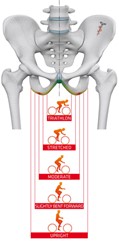
One of the most overlooked factors in saddle comfort is where your body sits on the saddle.
Most cycling saddles are designed to support the rider primarily on bony structures of the pelvis, rather than soft tissue.
Understanding this concept is critical to improving comfort.
Saddle Comfort for Road, Gravel and MTB Riders
For road cycling, gravel riding and mountain biking, riders are typically in a more upright position.
In these positions the saddle should primarily support the rider on the sit bones (ischial tuberosities).
Pressure mapping during a professional bikefit often reveals whether pressure is correctly distributed.
For example:
-
Excess pressure on the front of the saddle (pubic region) can lead to numbness and saddle pain.
-
When pressure is shifted back to the sit bones, discomfort often disappears immediately.
At Star Physio we use Gebiomized saddle pressure mapping technology to accurately measure where pressure occurs while riding.
This allows us to make precise adjustments to saddle position, reach and support.
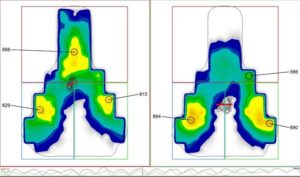
Our German Partners Gebiomized provide us with world-class saddle analysis software meaning we can view and analyse where you are sitting with ease.
Saddle Comfort for Time Trial and Triathlon
In time trial and triathlon positions, the body rotates forward and the pubic rami (front of the pelvis) take more load.
This requires different saddle designs that support the pelvis while reducing pressure on sensitive soft tissue.
Specialised saddles such as the Gebiomized Stride are designed specifically for these aerodynamic positions.
However, even with these saddles, correct positioning and stability remain critical to avoid:
-
friction related saddle sores
-
excessive pressure
-
pelvic instability
Interestingly, the Gebiomized Stride saddle was used by more professionals at the Ironman World Championships than any other saddle.
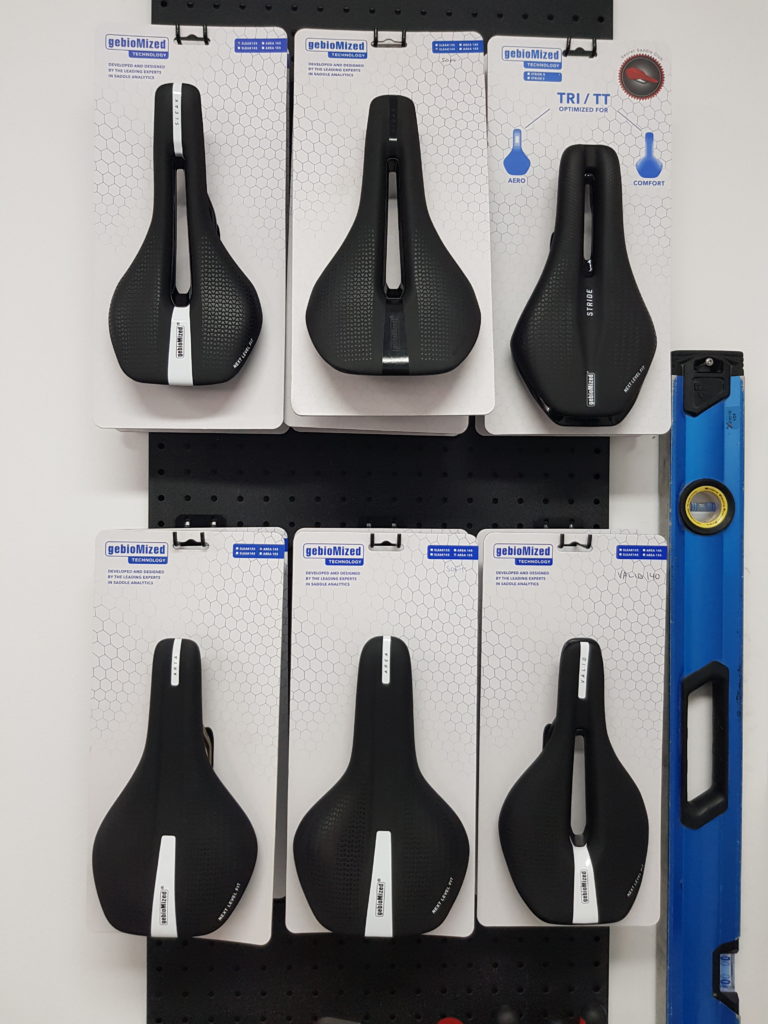
The Gebiomized Stride (top right) was used by more professionals at the 2023 Ironman World Championships than any other saddle!
Depending on your bike and riding style, you may require different bikefit options including road, triathlon or injury-specific bikefits.
Your Bike Position Plays a Huge Role in Saddle Comfort

Jai Hindley. Winner, 2022 Giro D’Italia
Many cyclists believe saddle pain is caused by the saddle itself.
In reality, bike position is responsible for the majority of saddle discomfort.
Two key factors are particularly important.
Handlebar Reach
If the handlebars are too far away, cyclists often slide forward on the saddle to reach the brakes.
This shifts pressure onto the pubic region and soft tissue, increasing the risk of:
-
numbness
-
saddle sores
-
genital pressure
-
erectile dysfunction in males
Correct reach helps the rider stay balanced over the sit bones.
Saddle Height
When a saddle is too high, riders often rock their pelvis while pedalling.
This creates friction against the saddle, which commonly leads to:
-
saddle sores
-
chafing
-
irritation
Another common compensation is moving forward onto the nose of the saddle, increasing pressure on sensitive tissue.
Before Buying a New Saddle — Check Your Bike Fit
-
When saddle pain occurs, many cyclists immediately buy a new saddle.
However, research and industry experience suggest that around 80% of saddle discomfort is caused by poor bike position rather than the saddle itself.
Without analysing the rider’s contact with the saddle, choosing a new saddle becomes guesswork.
At Star Physio we combine:
-
bike position assessment
-
saddle pressure mapping
-
rider biomechanics
-
pelvic structure analysis
to determine the best solution.
Choosing the Right Saddle
If a saddle change is necessary, several factors influence comfort.
-
Saddle Width
The correct saddle width depends on:
-
pelvic anatomy
-
sit bone width
-
riding position
For example, a rider with 144mm sit bones generally requires a saddle wide enough to support those bones.
However, in time trial positions, sit bone width becomes less relevant because the pubic rami support more load.
Saddle Shape
Saddle shape influences how the thighs move while pedalling.
Some popular saddles have a V-shaped design, such as the Specialized Power saddle.
These designs may work well for some riders, but cyclists with:
-
larger thighs
-
narrower pelvis
may struggle to sit properly on the sit bones due to the mid-saddle width.
This can push the rider forward, increasing pressure on the nose of the saddle.
Small differences in shape can make a significant difference in comfort.
Saddle density
The density of saddle foam or padding also plays a major role.
A very soft saddle may feel comfortable initially but can lose support during longer rides.
This is similar to sitting on an overly soft couch or mattress — it feels comfortable at first but becomes uncomfortable over time.
High-quality saddles often use different foam densities in different areas to balance comfort and support.
The Gebiomized saddle range is designed using extensive pressure mapping research to optimise support during long rides.
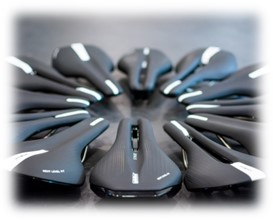
Star Physio carry the full range of Gebiomized saddles.
Saddle Comfort Summary
Saddle comfort is influenced by many factors including:
-
bike position
-
saddle support
-
pelvic anatomy
-
saddle width
-
saddle shape
-
foam density
Many cyclists try multiple saddles before discovering the real issue is their bike position.
A professional bikefit allows us to understand the rider’s:
-
body structure
-
flexibility
-
riding style
-
saddle pressure distribution
Often we can resolve saddle discomfort without changing the saddle at all.
If a new saddle is required, we can guide riders toward the most appropriate option.
Star Physio stocks the full range of Gebiomized saddles, and saddles purchased during a bikefit include a 14-day money-back guarantee.
Improve Your Saddle Comfort with a Professional Bikefit
If you are struggling with saddle pain or cycling discomfort, a professional bikefit can help identify the underlying cause.
Our Star Physio Bikefit team in Perth combines physiotherapy expertise with advanced pressure mapping technology to optimise cycling comfort and performance.
📞 Call (08) 6424 9578 or
📅 Book your bikefit online to improve your cycling comfort and performance.
Cycling Saddle Pain FAQ
Is saddle pain normal when cycling?
No. While many cyclists experience saddle discomfort, cycling should not be painful when your bike position and saddle support are correct. Most saddle pain is caused by poor bike setup rather than the saddle itself.
Should I buy a new saddle if I have saddle pain?
Not always. Around 80% of saddle discomfort is caused by poor bike position rather than the saddle itself. A professional bikefit can assess saddle pressure, rider position and pelvic support to identify the true cause.
How can a bikefit help with saddle pain?
A professional bikefit analyses your riding position, saddle support and pressure distribution. Technologies such as saddle pressure mapping help identify areas of excessive pressure so adjustments can be made to improve comfort and performance.
What saddle is best for cycling comfort?
The best saddle depends on your pelvic structure, riding position and bike setup. Width, shape and foam density all influence comfort. A professional bikefit can help determine the best saddle for your individual needs.
Where can I get a professional bikefit in Perth?
Star Physio WA provides professional physiotherapy-led bikefits in Perth using advanced saddle pressure mapping technology from Gebiomized. Our bikefit clinics are located in West Perth and Mosman Park.

Returning to exercise
Returning to exercise in Spring. Spring is here! It’s fantastic to see so many Perth people getting outdoors again as the weather warms up and the days grow longer. However, before you dive back into running, cycling, or gym sessions, there are a few important things...

Collagen and Protein
Is collagen your rehab MVP? Collagen is everywhere on your social feeds with powders, pills, gummies and more — but can it speed up your rehab? Donna Kimpton is an accredited practising dietitian (APD) who works with the team at Star Physio to help patients and...
Shockwave Therapy
Shockwave Therapy at Star Physio WA At Star Physio WA, we are excited to offer Shockwave Therapy, a modern treatment that delivers outstanding results for many stubborn injuries. This non-invasive treatment uses acoustic waves to stimulate healing in damaged tissues....
Top Tips for Post Injury Running Shoes
Running Shoes and Injury. Normal Running Loads. It can be frustrating for a runner to be sidelined with an injury. Running places considerable stress on the muscles, joints, tendons and ligaments. Even the most efficient runners see loads of 2-3 times their body...
