
Fuelling Rowing Performance: Sports Dietitian Donna Kimpton Presents at UWA/Shenton Rowing Club
Rowing performance is built on more than kilometres in the boat and hard sessions on the erg. Nutrition plays a major role in energy, recovery, adaptation to training and race-day performance.
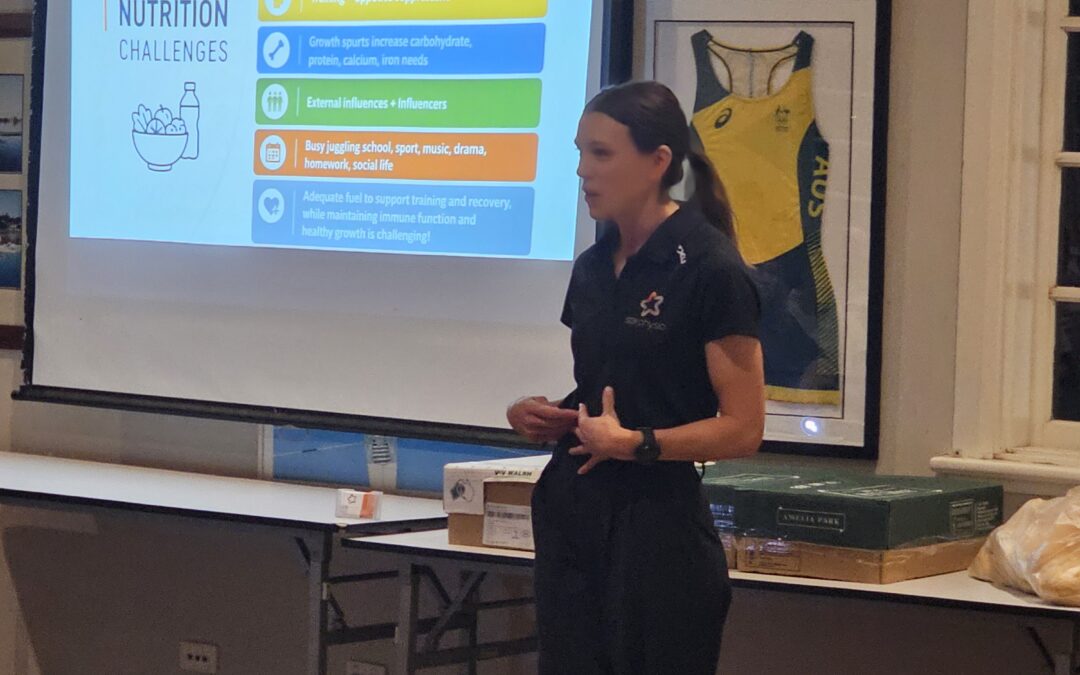
Recently, Star Physio sports dietitian Donna Kimpton presented at the UWA/Shenton Rowing Club Development Dinner, speaking to almost 100 athletes, coaches and rowing families about fuelling for rowing performance, recovery and the importance of adequate carbohydrate intake for endurance athletes.
The evening focused on practical strategies to help rowers train harder, recover better and avoid the common problem of under-fuelling, which can affect performance, health and injury risk.

Star Physio sports dietitian Donna Kimpton speaking to almost 100 athletes, coaches and families at the UWA/Shenton Rowing Club Development Dinner on fuelling for rowing performance.
Why Nutrition Matters for Rowers
Rowing is one of the most physically demanding endurance sports. Training often combines high training volumes, strength work, repeated high-intensity sessions and early mornings.
Without adequate fuelling, rowers may notice:
- Low energy during training
- Poor recovery between sessions
- Reduced performance or plateauing fitness
- Recurrent niggles or injuries
- Increased illness frequency
- Mood changes or poor concentration
- Feeling flat or “running on empty”
For junior and developing athletes, appropriate nutrition is especially important to support growth, training adaptation and long-term performance.
As Donna discussed during the presentation, carbohydrates are not the enemy for endurance athletes — they are fuel. For many rowers, the supermarket bread aisle really does become a second home.
Donna’s Rowing Nutrition Cheat Sheets
To help athletes put these concepts into practice, Donna has created two practical resources for rowers.
1. Nutrition Guide for Rowers and Endurance Athletes
A simple, practical guide covering key principles for fuelling training, recovery and performance.
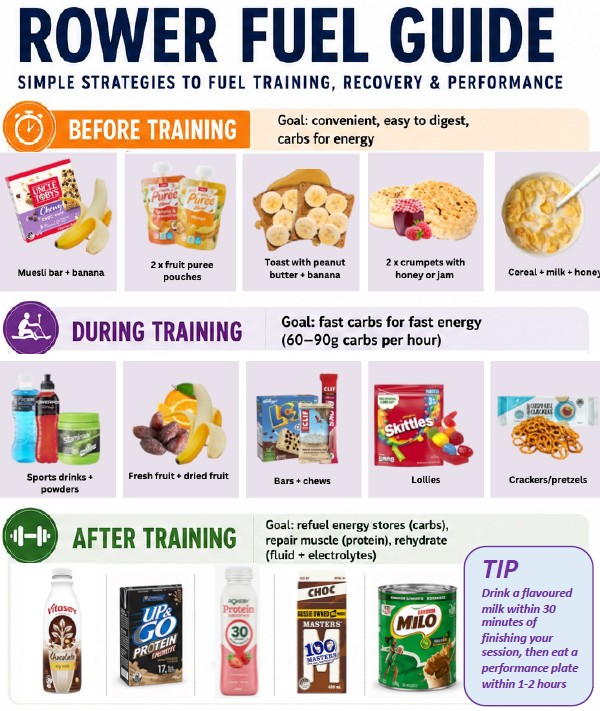
Nutrition cheat sheet for rowers by Star Physio sports dietitian Donna Kimpton.
What You’ll Learn in the Rowing Nutrition Guide
This guide helps rowers understand how to fuel training, improve recovery and avoid under-fuelling. It covers carbohydrate intake, recovery meals, training nutrition and practical ways to support rowing performance through demanding training blocks.
You can download a PDF version of the nutrition guide and performance plate below!
2. Performance Plate for Rowers and Endurance Athletes
A visual guide to building meals depending on training load and performance goals.
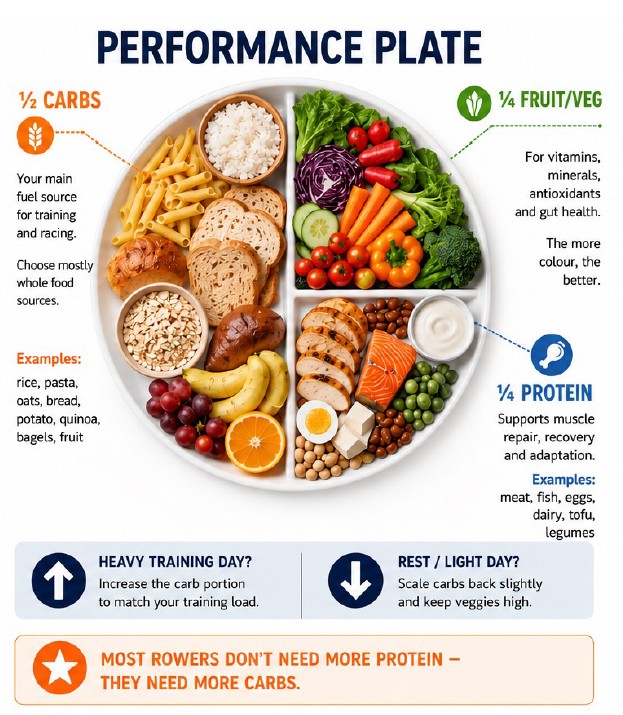
Performance plate nutrition guide for rowing and endurance sport.
What You’ll Learn in the Performance Plate Guide
The Performance Plate Guide provides rowers and endurance athletes with a simple visual framework for building meals that support training, recovery and performance. For athletes completing moderate to high training loads, the plate emphasises 50% carbohydrate, 25% protein, and 25% fruit and vegetables to help maintain energy availability and support recovery.
Carbohydrates are the primary fuel source for rowing and other endurance sports. Adequate intake helps support quality training sessions, improve recovery between workouts and maintain performance during demanding training blocks. Protein plays an important role in muscle repair and adaptation, while fruit and vegetables provide essential vitamins, minerals and antioxidants to support overall health and immune function.
The guide is designed as a practical starting point to help rowers make everyday nutrition decisions easier and ensure they are fuelling appropriately for performance.
Tip: These are practical starting points. Nutrition requirements vary significantly depending on training load, age, body composition goals, race preparation and recovery needs.
Not sure if you are fuelling properly for training?
Donna works with rowers, endurance athletes and junior developing athletes to optimise energy, recovery and performance.
When Should a Rower See a Sports Dietitian?
Rowers may benefit from seeing a sports dietitian if they are experiencing:
- Poor recovery between sessions
- Low energy availability
- Recurrent injuries or illness
- Trouble maintaining performance through heavy training blocks
- Gastrointestinal issues during training or racing
- Body composition or weight-making challenges
- Confusion around supplements or sports nutrition
Donna works with endurance athletes, junior developing athletes, rowers, cyclists, runners and triathletes, providing evidence-based nutrition support tailored to training and performance goals.
Need help with rowing injuries or performance?
Sports Dietitian Appointments in West Perth and Mosman Park
Donna Kimpton consults at Star Physio in West Perth and Mosman Park, helping athletes improve performance, recovery, energy availability and long-term health.
Whether you are a school rower, club athlete, masters competitor or endurance athlete, personalised nutrition strategies can make a significant difference to performance.
Work with Donna Kimpton
Whether you are a school rower, club athlete or endurance competitor, personalised nutrition advice can help improve fuelling, recovery and performance.
Learn more about Sports Dietitian Perth at Star Physio.
Interested in a Nutrition Presentation for Your Club or School?
Donna regularly presents to sporting clubs, schools and endurance groups on topics including:
- Fuelling for rowing performance
- Sports nutrition for endurance athletes
- Recovery nutrition
- Nutrition for junior athletes
- Competition and race-day fuelling
- Women’s health and performance nutrition
If your rowing club, school or sporting organisation would like Donna to present, please contact Star Physio [email protected]

4 Reasons To Take Up Cycling
People all over the world love cycling! It is a good form of regular exercise as well as an alternative option for the daily commute. Cycling has many physical and mental health benefits for individuals, as well as being better for the environment, easy to do...
Jumper’s Knee – What Is It and How Can I Fix It?
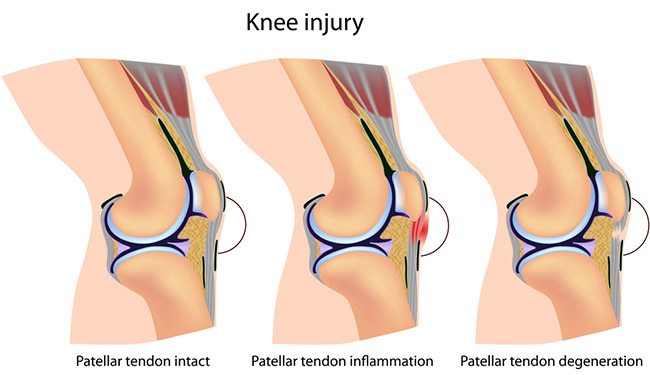
The team at Star Physio has seen a lot of clients with jumper's knee over the years. We shed some light on this overuse injury, common among volleyball and basketball players. What is Jumper’s Knee? Patellar tendinopathy, commonly known as jumper’s knee, is an overuse...
Good Habits for Eliminating Chronic Back Pain
At some point or another, almost everyone experiences acute back pain in their lifetime. It’s not a pleasant experience, but the good news is that in most instances, back pain can be relieved quickly with the help of a physiotherapist who can also help you prevent...

9 Common Causes of Shoulder Pain
Shoulder pain can stem from a variety of sources. Some of the most common include: 1. Overuse “Overuse injury” is an umbrella term for many conditions that stem from prolonged or suddenly-increased repetitive exercises. For example, prolonged mouse use could lead to...
