
Pressure Mapping Gait & Running Analysis at Star Physio WA
At Star Physio WA, we provide advanced pressure mapping gait and running analysis to support both our physiotherapy and podiatry services.
This technology gives us a detailed look at how your feet interact with the ground every step you take. As a result, we can uncover the root causes of shin pain, heel pain, knee issues, or lower back problems. Whether you are an athlete, a recreational runner, or someone struggling with chronic pain, pressure mapping combined with orthotics assessment can be a true game changer.
Dr Sam Steel (Pod) is a podiatrist at Star Physio West Perth and Mosman Park. He is an expert in running analysis and running injury management. Read his article below as he explains his own running injury management and pressure analysis technology for runners.
What is Pressure Mapping Running Analysis?
Using an in-shoe sensor system, pressure mapping measures how weight and pressure are distributed across your feet as you walk or run. In addition, the system records movement in real time, producing a colour-coded map that highlights areas of high and low loading.
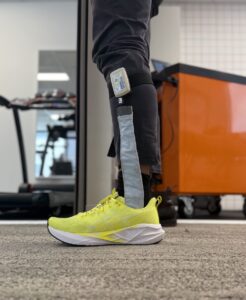
Gebiomized running pressure assessment technology ready for running assessment.
Key insights from running analysis include:
-
How evenly weight is distributed across both feet
-
Areas of excessive pressure or load
-
Motion of pressure through the gait cycle (from heel strike to toe-off)
-
Ground contact time, cadence, and acceleration vs deceleration pressures
Therefore, this level of detail allows our physiotherapists and podiatrists to go far beyond what the naked eye can see and provide evidence-based treatment recommendations.
How Pressure Mapping Helps with Shin Pain & Foot Conditions
By combining running analysis data with our podiatry assessments, we can detect biomechanical issues that may contribute to or worsen common conditions. For example:
-
Shin splints (medial tibial stress syndrome)
-
Plantar fasciitis
-
Achilles tendinopathy
-
Sesamoiditis
-
Runner’s knee
-
Painful corns and calluses
As a result, we can recommend personalised treatments such as orthotics, footwear changes, targeted physiotherapy, and strengthening programs. Importantly, these interventions do not just relieve pain, but they also help prevent recurrence.
Pressure Mapping in Action: Orthotics & Running Shoe Comparison
To demonstrate how pressure mapping works, we compared two pairs of running shoes:
-
New Asics Novablast 5
-
Older Asics Noosa Tri 15 (9 months old)
We tested both shoes with over-the-counter orthotics for comparison.
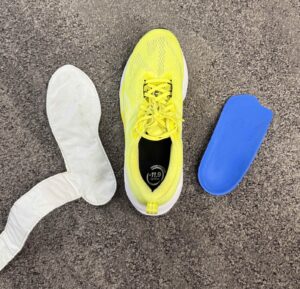
Asics Novablast with foot pressure sensor and orthotic.
Findings for High-Arched Feet
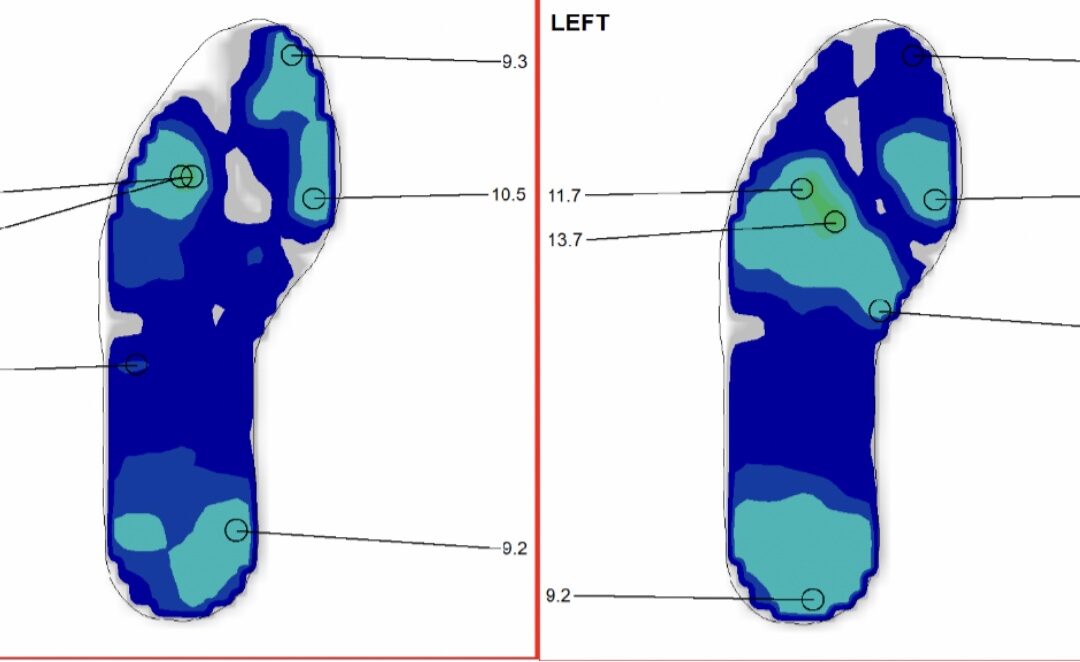
High arches typically show three main pressure points: heel contact, the base of the 5th metatarsal, and the base of the big toe.
For example, in this case, peak pressures were recorded under the big toe – a common cause of shin pain and forefoot conditions such as sesamoiditis or metatarsalgia.
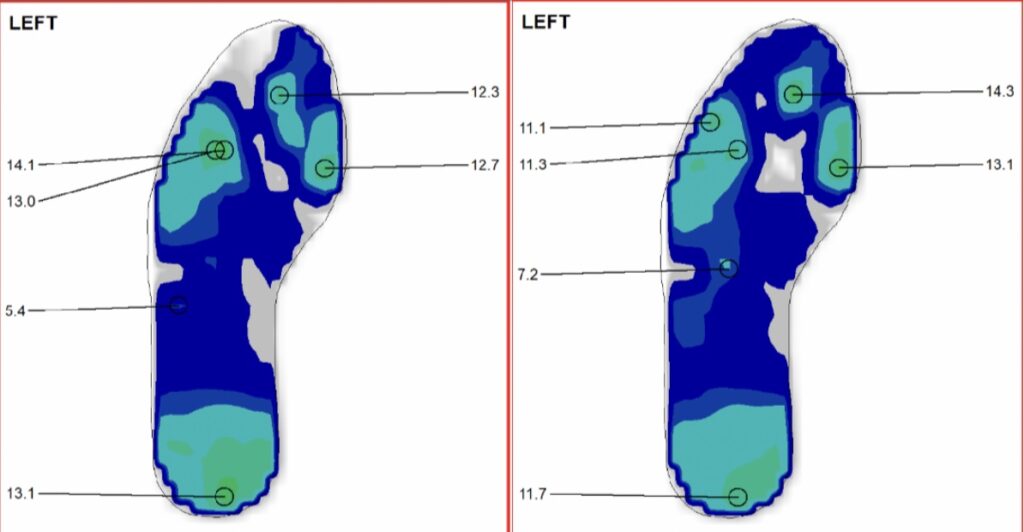
Left map shows Asics Novablast and right map shows Noosa Tri 15 both without insoles.
However, when orthotics were added:
-
Pressure became more evenly spread across the foot
-
More arch contact was visible, supporting the medial mid-foot
-
Peak heel forces reduced, improving shock absorption
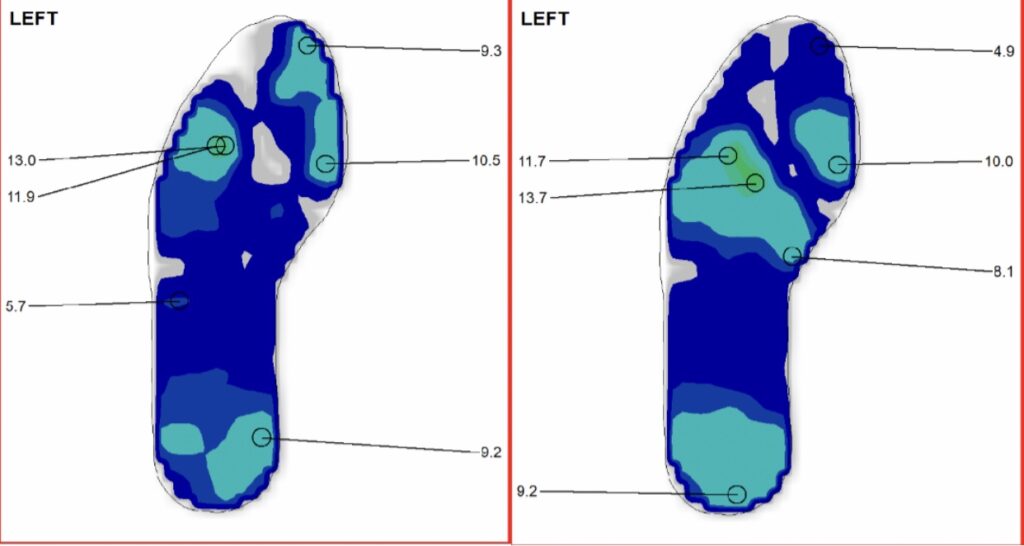
Left shows Novoblast with Orthotic. Right Shows Tri Noosa 15 with Orthotic
Therefore, for high arches, orthotics reduce shin strain. On the other hand, for flatter feet, orthotics help control pronation and reduce Achilles or plantar fascia stress.
Footwear Matters for Running Analysis
Both shoes tested were neutral runners, which explains why there was little difference in overall pressure patterns. However, the older Noosas revealed more medial loading due to midsole breakdown.
Running shoes typically last around 800km before they lose adequate support. Consequently, old footwear may increase shin pain and the risk of injury. This demonstrates the importance of regular shoe replacement as part of your running analysis and podiatry care plan.
Why Choose Star Physio WA for Podiatry & Running Analysis?
Pressure mapping gait analysis is more than just technology – it is about making better clinical decisions.
-
Accurately diagnose the source of shin pain or foot problems
-
Understand how shoes and orthotics affect your gait
-
Optimise running form, efficiency, and performance
-
Prevent injuries before they develop
In summary, pressure mapping allows us to deliver highly personalised solutions that are both effective and preventative.
Book Your Pressure Mapping Gait & Running Analysis
If you are experiencing:
-
Shin pain during running or walking
-
Recurrent plantar fascia or Achilles issues
-
Forefoot pain under the big toe
-
Or simply want to optimise your running technique
👉 Book in with our expert physiotherapists and podiatrists in West Perth.
You can book an appointment directly with Sam here!
You will receive a comprehensive running analysis, including pressure mapping, footwear review, and tailored advice on orthotics and injury prevention.
Note, Gebiomized Foot Pressure Analysis is only available at our West Perth Location.
📞 Call us on 6424 9578
🌐 Book online at starphysiowa.com.au
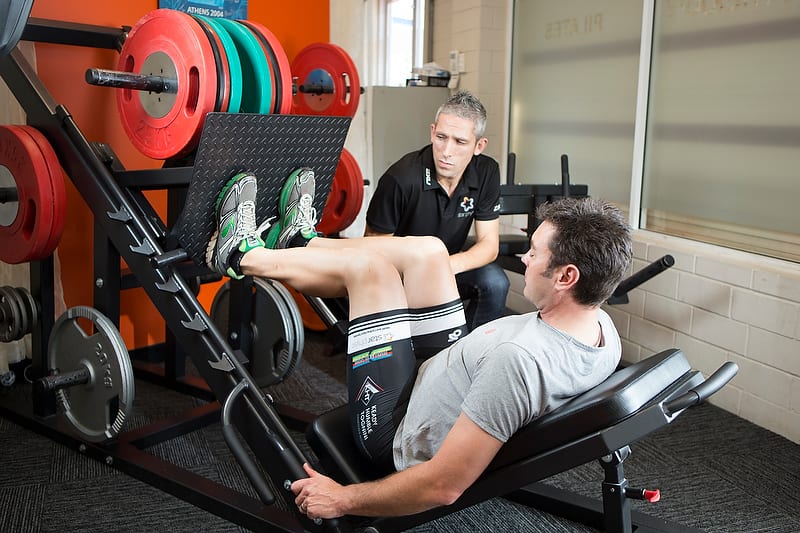
Have you got pain in the front of your hip? Expert Literature Review by Dr James Debenham PhD.
Physiotherapy as an initial treatment for Femoroacetabular impingement. Review of Literature. Dr James Debenham (PhD), Star Physio Research Director reviews physiotherapy treatment for a common hip complaint seen in athletes called femoroacetabular...

Coffee and performance
Coffee dosages in typical coffee drinks. Athlete or not, coffee is one of the most commonly ingested drinks in the world. Many of Star Physio's staff and clients take their coffee pretty seriously either for taste, performance or fashion! Many people do...
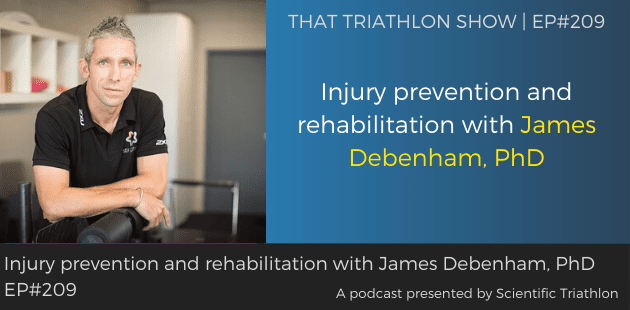
Injury Prevention Podcast with James Debenham
Injury prevention and rehabilitation with James Debenham, PhD | EP#209. That Triathlon Show James Debenham, PhD, is a physiotherapist and Director at Star Physio, a researcher and university lecturer, as well as an accomplished Ironman athlete himself. He...
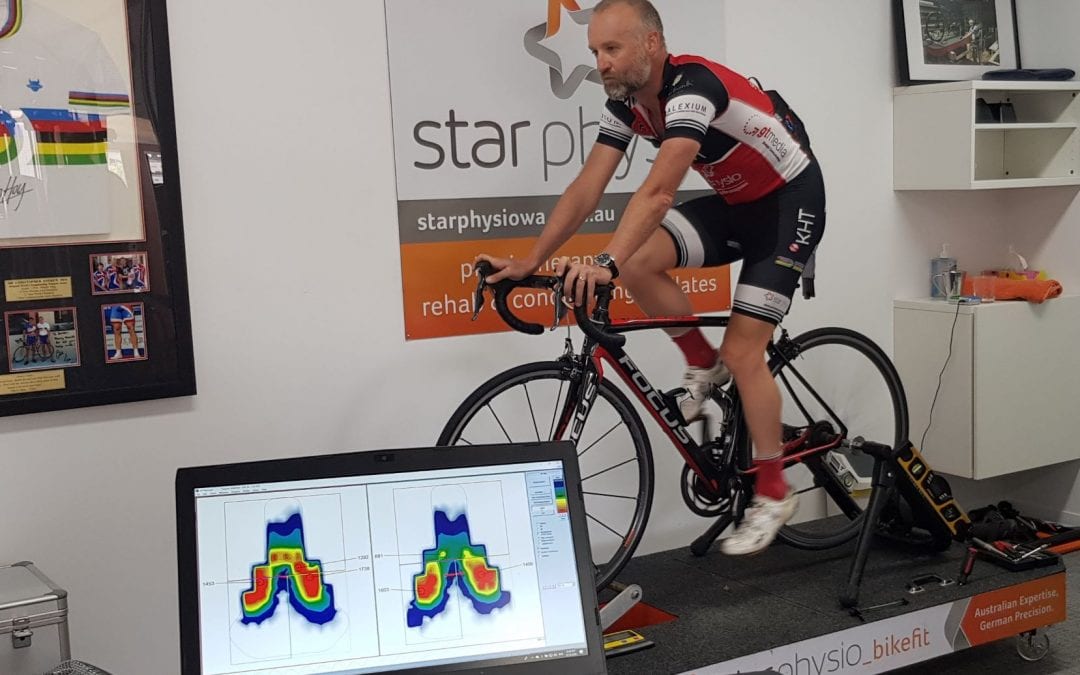
Star Physio Bikefit at Tour Down Under 2020
Course - Management of cycling injuries and bikefit. January 2020, Adelaide, February 2020, Perth. The Australian Physiotherapy Association have asked Star Physio's principal physiotherapist, Damian Oldmeadow, to present courses to physiotherapists on...
