
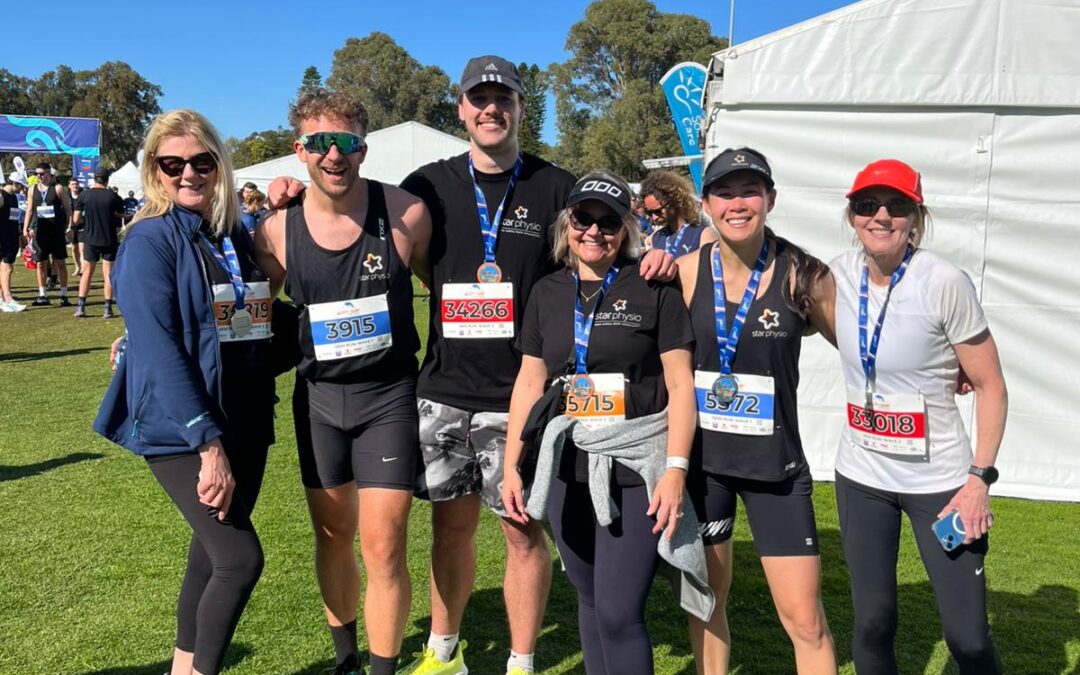
Returning to exercise in Spring.
Star Physio’s Nigel Travers keeps on running!!!
Spring is here! It’s fantastic to see so many Perth people getting outdoors again as the weather warms up and the days grow longer. However, before you dive back into running, cycling, or gym sessions, there are a few important things to consider. Here are our top tips for returning to exercise safely after a winter break.
Has Your Fitness or Strength Dropped?
Strength holds on surprisingly well during a short break. On the other hand, aerobic fitness and “spring” or bounce tend to drop away much faster. As a result, you may feel flat when you start training again.
👉 Check out Steve Jeffries’ article on strength decay for more detail.
Have You Put on Weight?
Exercise performance is often a power-to-weight ratio game. When walking or running, even small increases in body weight magnify the load on muscles, tendons, and joints like your knees and lower back. In addition, excess fat produces inflammatory hormones that can actually make pain worse.
👉 Need support? Book an appointment with our Dietitian Donna Kimpton at Mosman Park or Clinical Nutritionist, Jemma Watson in West Perth, for advice on healthy eating and long-term weight management.
Are You Ignoring an Old Injury or Niggle?
Rest may reduce pain temporarily, but it also decreases fitness and strength. Therefore, if you’ve carried a niggle through winter, now is the time to get it checked before you ramp up your training load.
👉 Don’t wait—book with one of our physiotherapists today.
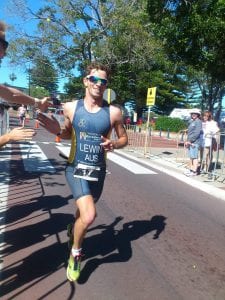
James Lewin is a former elite triathlete who is now physio to the best in the world!
Start Slowly and Build Gradually
If you’ve had a lazy winter, start at 50% of your previous volume and increase by just 10–20% per week. For example, use a simple walk/run plan rather than jumping straight into long-distance runs. Most importantly, listen to your body and adjust as you go.
Many athletes—at all levels—train too hard, too often. However, research shows that the best athletes in the world, including those James Lewin works with as physiotherapist to the Australian Triathlon Team, spend most of their training at low intensity. Consequently, building your base gradually sets you up for better performance and fewer injuries. Check out that great read here!
Takeaway
In summary, if you’re returning to exercise this spring, start slow, respect your body, and seek expert help when needed. At Star Physio WA, our physiotherapists, exercise physiologists, and nutritionists are here to help you rebuild strength, fitness, and confidence—safely and sustainably.
📞 Call us on 6424 9578 or
🌐 Book online today.
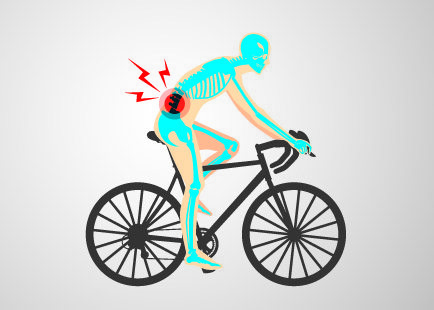
Beginner bike mistakes to avoid
At first glance, starting out on a bike for the first time seems easy – all you need is yourself, some comfortable clothing and the bike, right? Well… Sort of. Cycling actually has a lot more to it than you might think. While you might not see it at first glance, all...
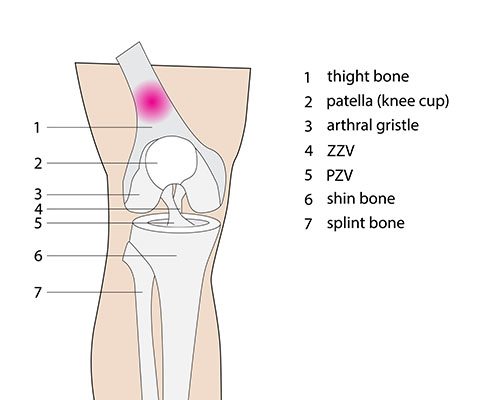
The right way to treat tendonitis
At Star Physio, we’re proud to have two members of staff who have received Doctorates for their research into tendinopathy. Doctors James Debenham and Merv Travers have published research in Achilles Tendinopathy in the Journal of Science and Medicine in Sport. We...

Why correct Bikefit is crucial for beginners and the risks of getting it wrong
Getting your bike fitted to your body is crucial for beginner cyclists to avoid injuries down the line. If your bike is not fitted through a professional fitting service and you rely on feel alone to find the right position, you risk teaching yourself poor technique,...
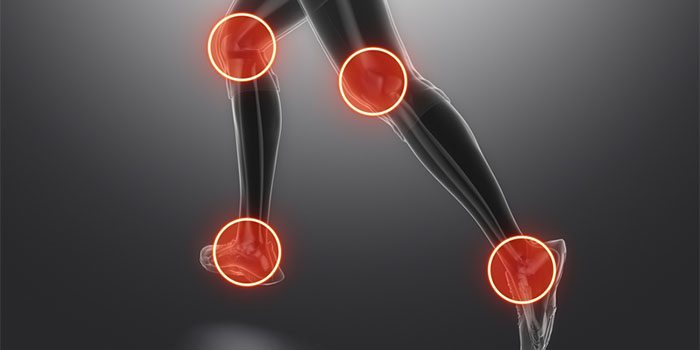
Avoid overuse injuries while training and how to identify them
Overuse injuries can appear as sudden, agonising flare-ups of pain, commonly affecting the tendon that seem to come out of nowhere, or they can manifest as nagging ongoing pain that is somewhat manageable but restricts training or performance. Either way, overuse...
